
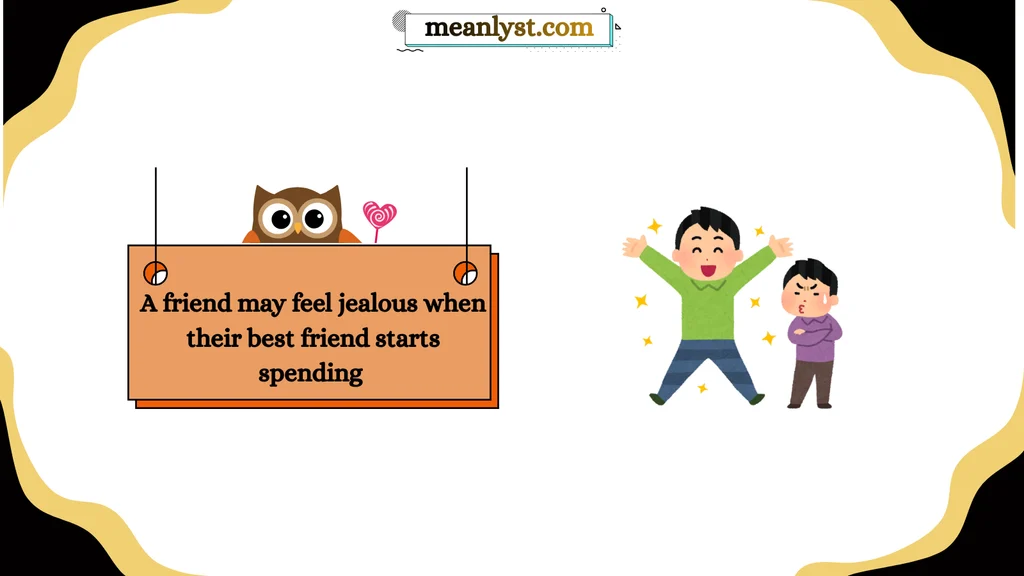
Jealousy is a common human emotion that can appear when someone feels threatened by the possibility of losing a person, relationship, position, attention, or something important to them.
People often experience jealousy in romantic relationships, friendships, family situations, school, work, and social media.
For example, someone may feel jealous when their partner spends a lot of time with another person, or when a close friend becomes closer to someone else.
In simple words, jealousy can mean:
Feeling worried, insecure, or unhappy because you fear that someone or something important to you may be taken away or replaced.
What Does Jealousy Mean?
Jealousy means a feeling of insecurity, fear, or unhappiness caused by the possibility of losing someone’s attention, affection, relationship, or position to another person.
The exact meaning depends on the situation.
For example:
- A boyfriend may feel jealous when his partner gets attention from someone else.
- A friend may feel jealous when their best friend starts spending more time with another friend.
- An employee may feel jealous when a coworker receives recognition or a promotion.
- Someone may feel jealous when another person’s lifestyle appears better than theirs.
Jealousy is often connected to fear of loss, insecurity, attachment, or comparison.
Jealousy Meaning in Relationships
Jealousy is especially common in romantic relationships.
A person may feel jealous when they believe another person could become a threat to their relationship.
For example:
“She felt jealous when her boyfriend started talking to his ex again.”
In this situation, jealousy may come from fear of losing the relationship or uncertainty about the partner’s feelings.
A small amount of jealousy can sometimes simply show that someone cares about a relationship. However, intense or controlling jealousy can create problems.
Jealousy in Friendship
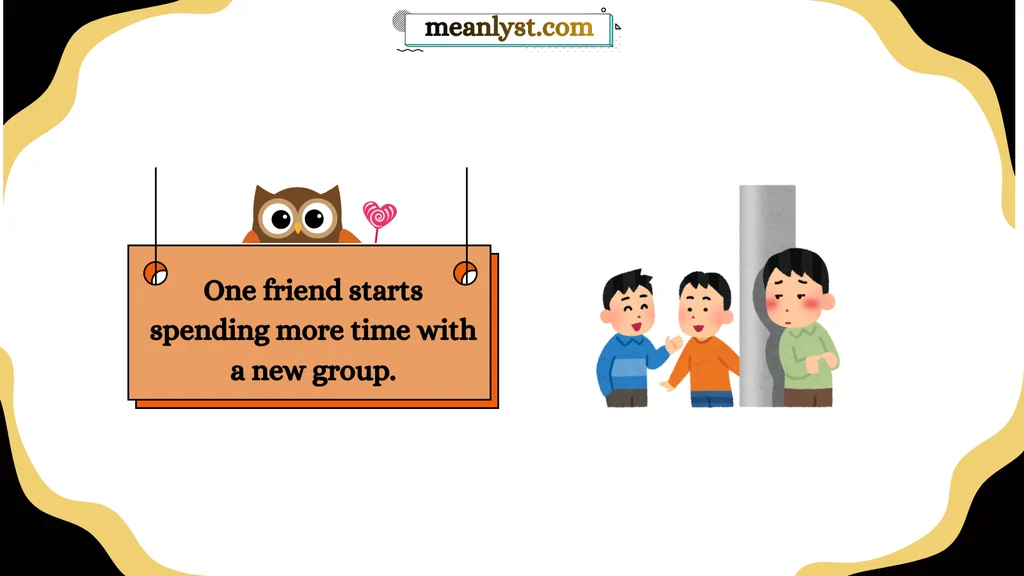
Jealousy can happen between friends too.
Imagine two close friends who have always spent a lot of time together. One friend starts spending more time with a new group.
The other friend might think:
“Maybe I’m not important to them anymore.”
That feeling can lead to jealousy.
Friendship jealousy may involve:
- Fear of being replaced
- Feeling left out
- Wanting someone’s attention
- Comparing friendships
- Feeling ignored
- Worrying about losing closeness
Jealousy Meaning in Everyday Life
Jealousy is not limited to relationships.
People can experience jealousy when comparing themselves with others.
For example:
“I was jealous when my coworker got the promotion I wanted.”
Here, jealousy may involve feelings about status, achievement, recognition, or opportunity.
Someone might also feel jealous about another person’s:
- Money
- Career
- Success
- Appearance
- Popularity
- Possessions
- Opportunities
- Social life
Jealousy vs. Envy
Jealousy and envy are related, but they are not exactly the same.
Jealousy
Jealousy often involves three people or a perceived threat to a relationship.
For example:
“I’m jealous because my best friend is becoming close to someone else.”
You have something important, such as a friendship, and you fear losing it.
Envy
Envy usually involves wanting something that another person has.
For example:
“I envy her beautiful house.”
You want something that belongs to someone else.
A simple way to remember the difference is:
Jealousy = fear of losing something important.
Envy = wanting something someone else has.
In everyday conversation, however, people sometimes use the words interchangeably.
Jealousy Meaning in Texting
In texting, people often use “jealous” in a casual or playful way.
For example:
“You’re going on vacation? I’m jealous 😂”
This does not necessarily mean serious emotional jealousy.
It can simply mean:
“I’m envious because I wish I could do that too.”
Another example:
“Okayyy, I’m jealous! That food looks amazing.”
Here, “jealous” is being used casually to express admiration and desire.
Jealousy on Social Media
Social media can sometimes make jealousy more noticeable because people constantly see other people’s:
- Vacations
- Relationships
- Careers
- Homes
- Clothes
- Achievements
- Social events
- Lifestyle updates
Someone may see a friend’s vacation photo and think:
“I wish I could go there too.”
They might comment:
“So jealous!”
In this context, the word is often friendly rather than serious.
Is Jealousy a Bad Emotion?
Jealousy itself is not necessarily a “bad” emotion.
Emotions can provide information about how someone feels.
For example, jealousy might make a person realize:
- They are afraid of losing someone.
- They feel insecure.
- They want more attention.
- They are comparing themselves with others.
- Something in a relationship is making them uncomfortable.
The important part is how a person responds to the emotion.
Feeling jealous is different from acting in a controlling, threatening, or harmful way.
Signs of Jealousy
Jealousy can appear differently from person to person.
Possible signs include:
- Becoming unusually suspicious
- Feeling insecure
- Comparing yourself with others
- Wanting someone’s attention
- Feeling left out
- Asking repeated questions
- Becoming upset when someone spends time with another person
- Constantly checking social media
- Worrying about being replaced
These behaviors do not automatically prove someone is jealous. The situation and person’s feelings matter.
Jealousy in Love
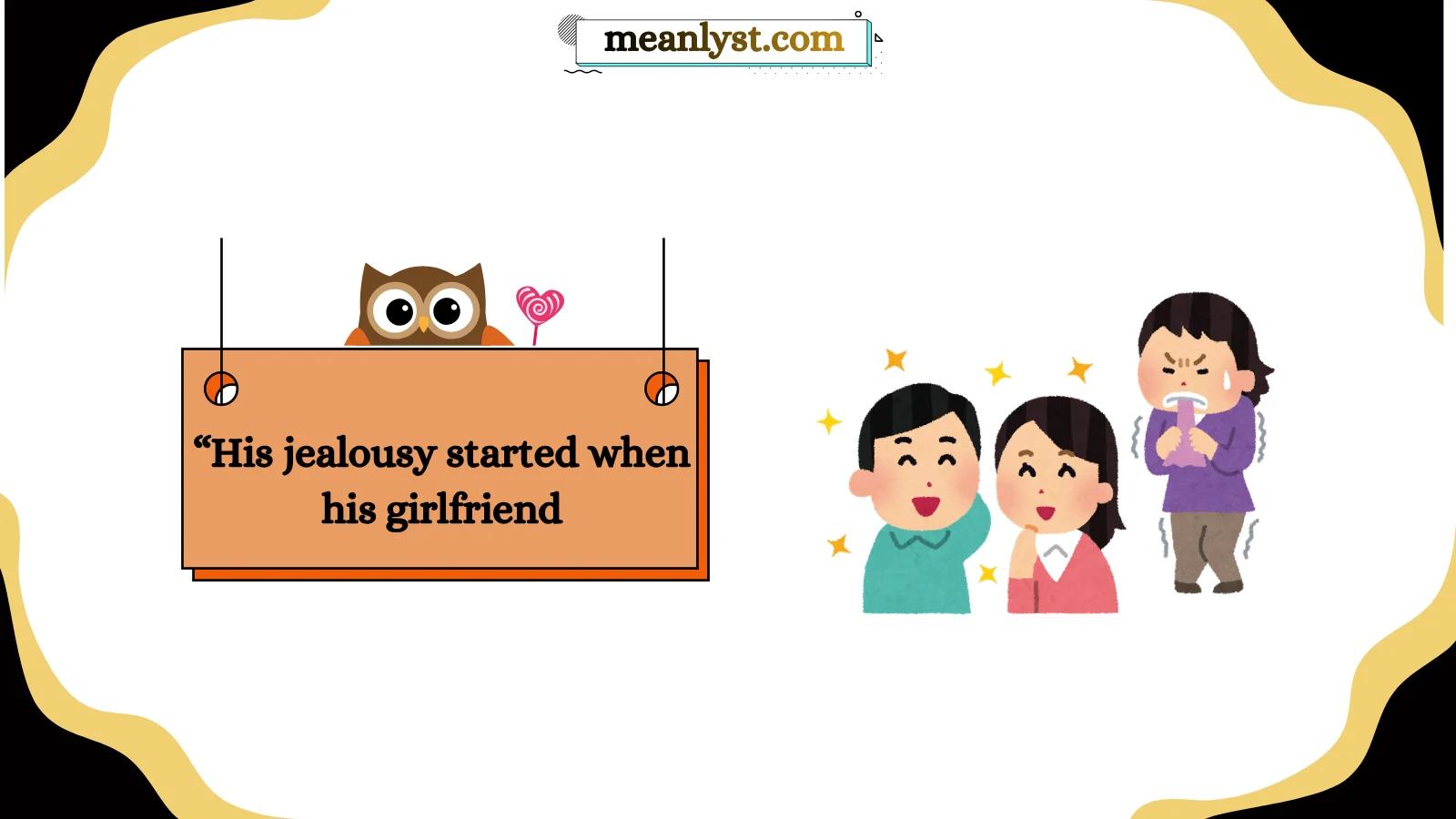
When people talk about jealousy in love, they often mean the fear that someone else could take their partner’s attention or affection.
For example:
“His jealousy started when his girlfriend became close friends with another man.”
Romantic jealousy may come from attachment, insecurity, previous experiences, or uncertainty in the relationship.
Healthy communication can help people understand what is causing those feelings.
Jealousy After a Breakup
Jealousy can also continue after a relationship ends.
For example, someone may feel jealous after seeing their ex-partner with someone new.
They might think:
“How can they move on so quickly?”
This feeling can happen even when the person does not actually want the relationship back.
Sometimes jealousy after a breakup is connected to attachment, hurt, comparison, or difficulty accepting change.
Jealousy vs. Insecurity
These two words are closely related but have different meanings.
Insecurity is uncertainty or lack of confidence about yourself, your relationship, or your situation.
Jealousy is often a reaction to a perceived threat or fear of losing something important.
For example:
“I feel insecure about my relationship.”
This describes uncertainty.
“I feel jealous when my partner spends time with someone else.”
This describes a particular emotional reaction.
Insecurity can contribute to jealousy, but they are not the same thing.
Is “Jealousy” a Slang Word?
No. “Jealousy” is a standard English word, not slang.
It can be used in formal and informal conversations.
However, on social media and in texting, people often use “jealous” casually.
For example:
“I’m so jealous of your new shoes!”
This can simply mean:
“I really like them and wish I had a pair too.”
Common Phrases With Jealousy
Here are some common expressions:
“I’m jealous.”
Usually means you wish you had or experienced what another person has.
“Don’t be jealous.”
Can be serious or playful depending on the situation.
“Jealous of someone”
Means feeling jealousy toward another person.
“Jealous of something”
Means wishing you had something another person has.
“Jealous type”
Describes someone who tends to become jealous easily, especially in relationships.
“Green-eyed monster”
This is an old expression associated with jealousy.
Examples of Jealousy in Sentences
Example 1:
“She felt jealous when her best friend started spending more time with someone else.”
Example 2:
“He became jealous when another person started flirting with his girlfriend.”
Example 3:
“I’m so jealous of your vacation!”
Example 4:
“Her jealousy caused arguments in the relationship.”
Example 5:
“Try not to compare yourself with others because it can create unnecessary jealousy.”
Common Misunderstandings About Jealousy
Jealousy Does Not Always Mean Love
Someone being jealous does not automatically prove that they love you deeply.
Jealousy can come from insecurity, fear, attachment, or a desire for control.
Jealousy Is Not Always Serious
When someone says:
“I’m jealous!”
in a text or social media comment, they may simply be joking or expressing admiration.
Jealousy and Envy Are Not Exactly the Same
Although people often use them interchangeably, jealousy usually involves fear of losing something, while envy usually involves wanting something someone else has.
Feeling Jealous Does Not Make Someone a Bad Person
Jealousy is a normal human emotion. What matters is how someone handles it.
Frequently Asked Questions
What is the simple meaning of jealousy?
Jealousy is a feeling of insecurity, fear, or unhappiness when you think you might lose something or someone important to another person.
What does jealousy mean in a relationship?
In a relationship, jealousy often means fearing that another person could receive your partner’s attention, affection, or interest.
Is jealousy the same as envy?
No. Jealousy usually involves fear of losing something, while envy usually means wanting something another person has.
What does “I’m jealous” mean in texting?
In texting, “I’m jealous” can simply mean “I wish I had that too.” It is often playful and does not always indicate serious jealousy.
Is jealousy normal?
Yes. Jealousy is a common human emotion. However, extreme or controlling behavior caused by jealousy can become unhealthy.
What causes jealousy?
Jealousy can be connected to insecurity, fear of losing someone, comparison, attachment, past experiences, or uncertainty.
Is jealousy a sign of love?
Not necessarily. Jealousy can occur in relationships, but it does not automatically prove love or commitment.
Conclusion
Jealousy is a common emotion connected to fear, insecurity, comparison, and the possibility of losing someone or something important.
It can appear in romantic relationships, friendships, family situations, workplaces, and everyday life.
On social media and in texting, however, “jealous” is often used casually to mean “I wish I had that too.”
Understanding the difference between jealousy and envy can also make the meaning easier to understand.
In simple terms:
Jealousy is often about fearing that you may lose something important, while envy is about wanting something someone else has.